World War II
Miss Peregrine's Home of Peculiar ChildrenWorld War II gives the novel’s stories of monsters and enchanted refuge their historical weight. It separates Abraham Portman from his family, brings the orphanage that sheltered him to an end, and leaves losses whose effects reach his son and grandson. As Jacob learns what the stories concealed, the war becomes not only a past catastrophe but an inheritance of grief, secrecy, and misrecognition.
Historical Background
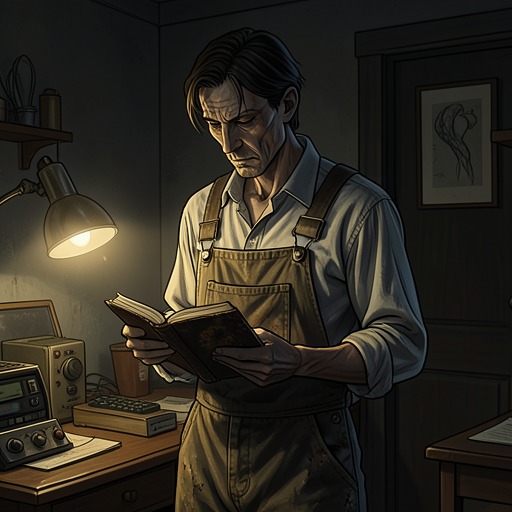
Abraham was twelve when his parents sent him from Poland to Britain before the war, placing him on a train with a suitcase and the clothes he was wearing. He was the only member of his family to escape Poland; he never saw his parents, older brothers, cousins, aunts, or uncles again. They were all dead before his sixteenth birthday. The childhood explanation that monsters were pursuing him was therefore an indirect account of a real danger: persecution by people whose ordinary human appearance made them harder to recognize as monsters.
The novel sets this family history against the persecution of Jews and peculiar people. In the account Jacob eventually hears, Abraham had been born Jewish during a period of extreme danger and faced what Miss Peregrine calls a double genocide: Jews were targeted by the Nazis, while peculiar people were hunted by Hollowgasts. Abraham was tormented by the knowledge that he was sheltered while both communities suffered. The fantasy language does not erase the historical violence; it is the form through which the child Jacob first encountered a truth too terrible to understand directly.
Cairnholm and the Orphanage
The island’s wartime history offers another correction to Abraham’s tales. A local account explains that an anti-aircraft battery at Cairnholm’s far tip made the island a military target. Residents heard sirens, sought shelter, and relied on an air-raid warden to check that curtains were drawn and streetlights extinguished. Although people expected the mainland’s ports and factories to be more important targets, German bombs eventually fell on the island.
The raid took place on September 3, 1940. According to the account Jacob hears, no townspeople were killed, but the gun crews suffered losses and a bomb destroyed the orphanage, killing the children there. This history lies beneath the apparently timeless refuge of Abraham’s stories: its endless summers and guardian angels recast a home lost to wartime violence as a protected world. The children’s extraordinary quality, Jacob later understands, was not miraculous power but their survival after persecution and displacement.
What the War Leaves Behind
Abraham’s survival did not end the effects of the war. After the Nazis’ rule ended, Hollowgasts emerged stronger, and many peculiar people remained in hiding. Abraham, however, returned from the war changed: he had become a warrior and was determined to build a life outside the loop rather than continue hiding. His decision to leave also meant separating himself from the community and relationships that had sheltered him.
The losses shaped his family life after the war. Abraham had lost his relatives in Poland and, later, the children who formed his adopted family at the orphanage. His son Frank recalls Abraham as frequently absent and emotionally distant, explaining that Abraham may not have known how to be a father after all his siblings had died. Jacob connects that history to his father’s childhood and wonders whether it also explains Abraham’s distance from the next generation. The novel presents this as a possible inheritance of grief, not as a certainty that resolves every family mystery.
Memory Across Generations
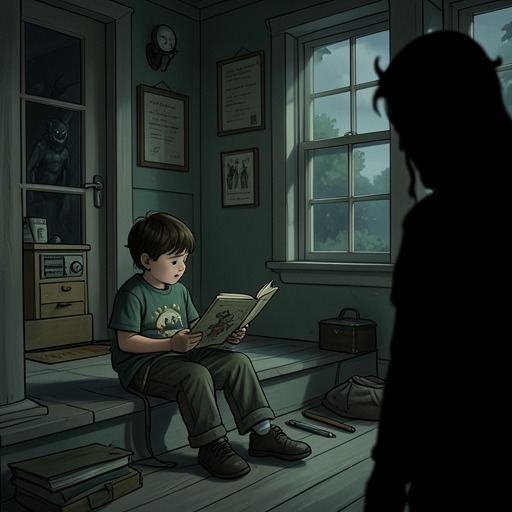
Abraham’s stories initially sound to Jacob like inventions. He remembers the monsters as frightening figures from childhood tales, then rejects the stories and the photographs as fakes. Learning that the war killed Abraham’s family changes the meaning of those memories: the fantastical monsters were a child’s translation of human persecution, and the island paradise disguised the reality of a wartime refuge and its destruction. The shift does not make every image literal; it reveals the painful history concealed within the family’s imaginative language.
The truth arrives late, through family recollection and the testimony of people who knew Abraham. Jacob’s recognition that he had dismissed his grandfather’s warnings brings shame and the thought that belief might have changed the outcome, though the story does not establish that it would have saved Abraham. Jacob also experiences the family’s accumulated losses as a burden passed between generations: the deaths of Abraham’s relatives, his father’s sense of having had no father, and Jacob’s own distress become linked in his understanding. World War II thus remains present in the novel through what survivors cannot easily explain, what descendants misunderstand, and what later testimony makes newly visible.